National park · California
Death Valley National Park
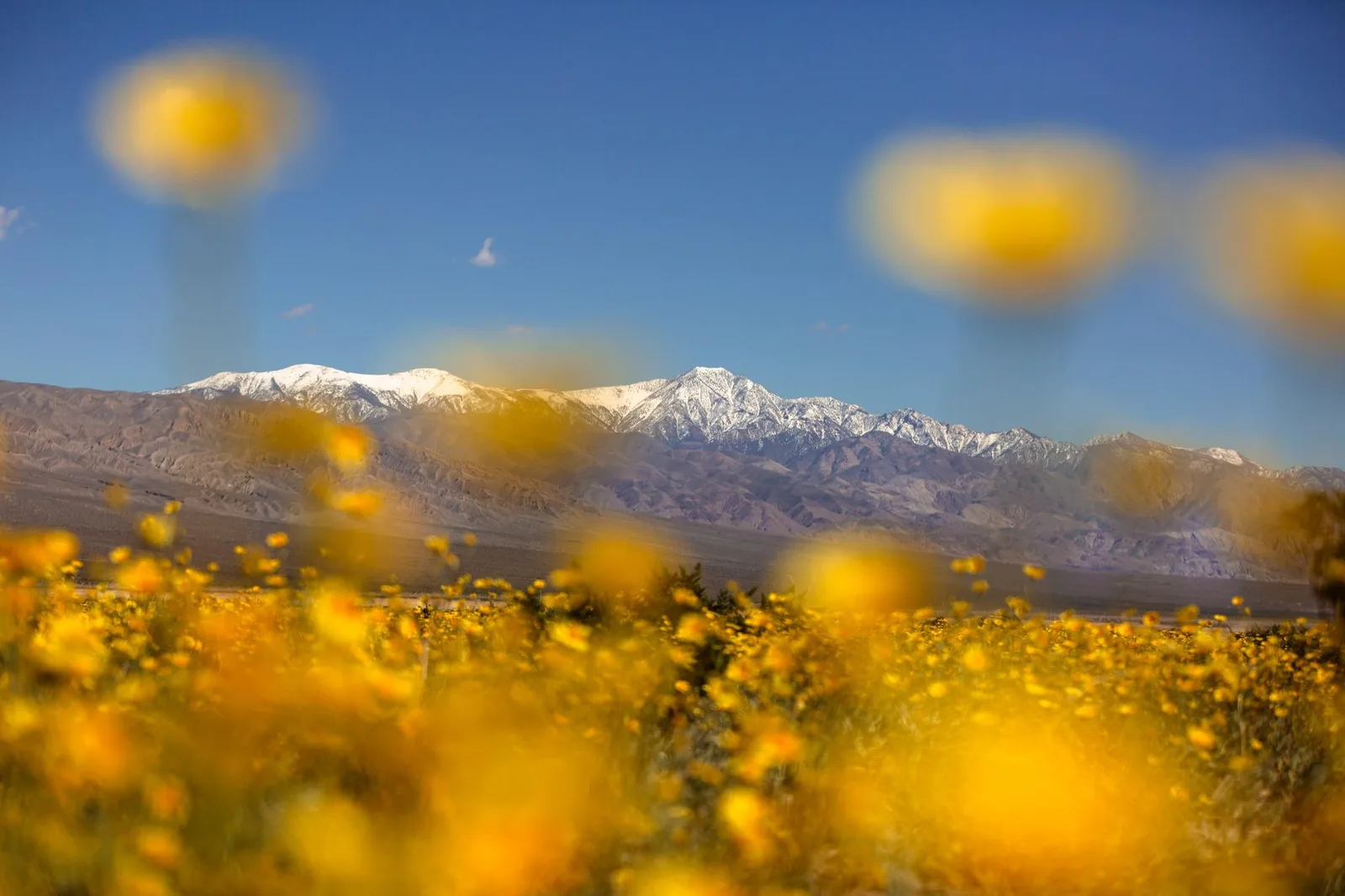
The largest national park in the contiguous U.S. and the hottest, driest, lowest place in North America, spanning a desert basin that dips to 282 feet below sea level.
- Entrance
- $30 private vehicle
- Hours
- Open 24 hours daily Death Valley National Park
- Established
- 1994
- Region
- California
The real park boundary. Scout checks whether your phone is inside this line.
Collect it
Scout adds Death Valley National Park to your collection when your phone is inside the park boundary. Already been? A photo you took there counts too.
Collect Death Valley in ScoutFree on iPhone and Android.
History
Death Valley National Park is the largest national park in the contiguous United States and is known for being the hottest, driest, and lowest national park in North America. It serves as a critical conservation area for unique desert ecosystems and wildlife.
Key events
- February 11, 1933Death Valley National Monument proclaimed by President Herbert Hoover.
- October 31, 1994Redesignated and expanded as Death Valley National Park by the California Desert Protection Act.
- Death Valley was named by a group of European-Americans who got lost in the valley in 1849, although only one member of their group died there.
- Death Valley holds the record for the highest air temperature ever recorded on Earth at 134 °F (56.7 °C) on July 10, 1913.
Trails
- Golden Canyon to Red Cathedral 3 mi · Moderate
- Mosaic Canyon 4 mi · Moderate
- Darwin Falls 2 mi · Easy
- Badwater Salt Flats 2 mi · Easy
- Telescope Peak 14 mi · Hard
Plan your visit
Hours · Death Valley National Park
Open 24 hours, every day
The park is open daily all year.
Entrance fees
- Private Vehicle $30
- Motorcycle $25
- Per Person $15
- Non-commercial Groups $15
- Education/Academic Groups Free
Fees and hours as of May 2026. Check current details on NPS.gov
When to go
- Winter. Comfortable hiking temps 60-70°F, ideal exploration conditions
- Spring. Wildflower superbloom potential, mild temperatures
- Fall. Cooling temps, fewer crowds, beautiful light for photography
- Summer. Extreme heat 110-125°F, only for experienced desert travelers