National park · Florida
Dry Tortugas National Park
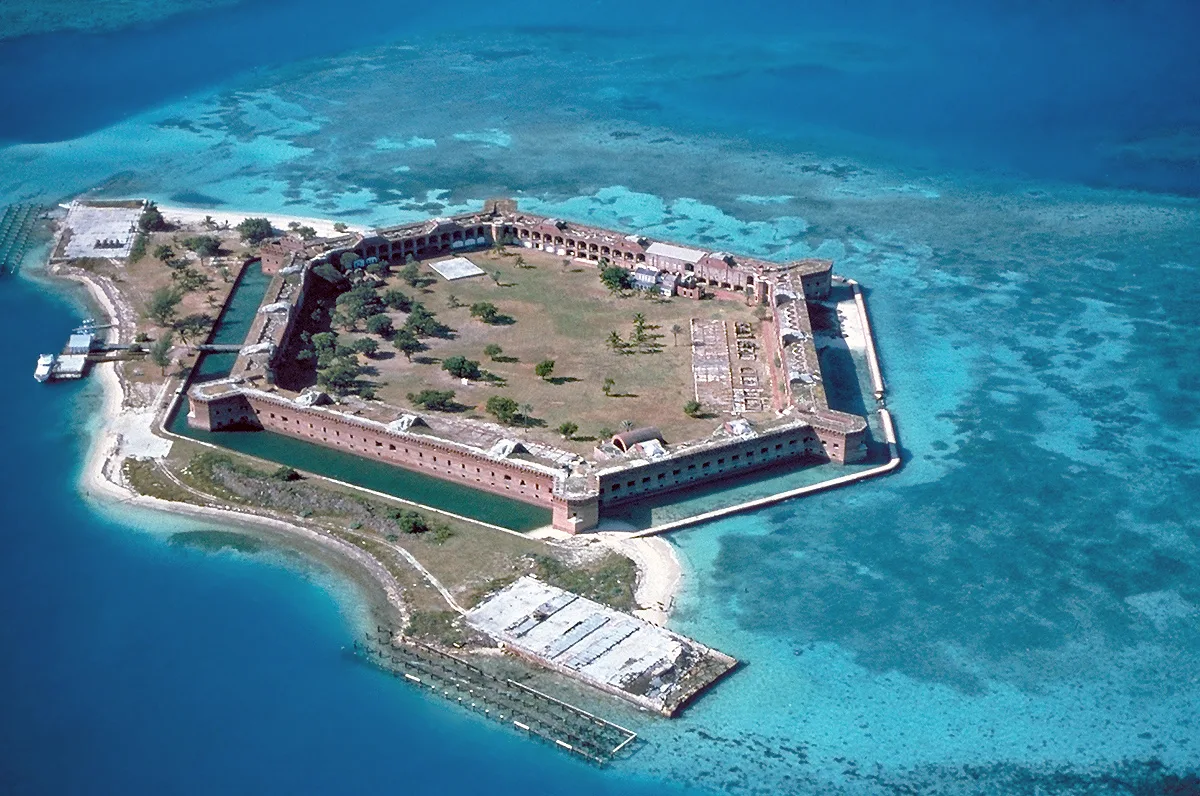
A remote Florida Keys park 70 miles west of Key West, centered on Fort Jefferson — the largest brick masonry structure in the Western Hemisphere, used as a Civil War military prison — surrounded by largely undisturbed tropical reef.
- Entrance
- $15 per person
- Hours
- Open 24 hours daily Dry Tortugas
- Established
- 1976
- Region
- The Southeast

The real park boundary. Scout checks whether your phone is inside this line.
Collect it
Scout adds Dry Tortugas National Park to your collection when your phone is inside the park boundary. Already been? A photo you took there counts too.
Collect Dry Tortugas in ScoutFree on iPhone and Android.
History
Dry Tortugas National Park is home to Fort Jefferson, the largest brick masonry structure in the Western Hemisphere, which played a significant role during the Civil War as a military prison. The park preserves a largely undisturbed tropical ecosystem alongside significant historic artifacts, making it a unique blend of natural and cultural heritage.
Key events
- January 4, 1935Fort Jefferson designated a National Monument by President Franklin D. Roosevelt.
- October 26, 1992Redesignated as Dry Tortugas National Park; 99% of the park is water.
- The park has averaged about 63,000 visitors annually from 2008 to 2017, showcasing its appeal as a natural and historical destination.
Trails
- Fort Jefferson Self-Guided Tour 0.5 mi · Easy
- Garden Key Beach Walk 0.4 mi · Easy
- Moat Wall Loop 0.5 mi · Easy
- Bush Key Walk (seasonal, Oct–Jan) 0.25 mi · Easy
- Loggerhead Key Paddle 6 mi · Hard
Plan your visit
Hours · Dry Tortugas
Open 24 hours, every day
The Dry Tortugas is open 24 hours, 7 days a week. This includes holidays.
Entrance fees
- Per Person $15
Fees and hours as of September 2026. Check current details on NPS.gov
When to go
- Spring. Peak migration for sooty terns and frigatebirds (Feb–April), warm calm seas, excellent snorkeling visibility
- Summer. Calmest water and best dive conditions, but hot and prone to afternoon storms
- Fall. Fewer crowds, good snorkeling, Bush Key reopens to visitors in October after tern nesting closure
- Winter. Cooler dry-season temperatures but windier conditions can disrupt the ferry