National park · Hawaii
Haleakalā National Park
Centered on the dormant Haleakalā volcano, this Maui park shelters more endangered species than any other national park in the United States.
- Entrance
- $30 private vehicle
- Hours
- Open 24 hours daily Operating Hours
- Established
- 1976
- Region
- Islands & Shores
The real park boundary. Scout checks whether your phone is inside this line.
Collect it
Scout adds Haleakalā National Park to your collection when your phone is inside the park boundary. Already been? A photo you took there counts too.
Collect Haleakalā in ScoutFree on iPhone and Android.
History
Haleakalā National Park is significant for its unique geological features, including the dormant Haleakalā Volcano, and its rich biodiversity, housing more endangered species than any other national park in the United States. It was originally part of Hawaii National Park, which was established in 1916, highlighting its long-standing importance in the conservation of natural landscapes in Hawaii.
Key events
- Haleakalā was designated an International Biosphere Reserve in 1980.
- The last eruption of Haleakalā Volcano occurred sometime between 1480 and 1600 AD.
- Nēnē, the Hawaiian geese, were re-introduced to the park in 1946 after having died out entirely.
- The park has deferred maintenance valued at over $24 million as of 2018.
Trails
- Sliding Sands Trail 11.2 mi · Hard
- Pipiwai Trail to Waimoku Falls 4 mi · Moderate
- Hosmer Grove Loop 0.5 mi · Easy
- Halemau'u Trail 8 mi · Hard
- White Hill Trail 0.6 mi · Easy
Plan your visit
Hours · Operating Hours
Open 24 hours, every day
The Summit and Kīpahulu Districts of Haleakalā are open 24 hours a day. A sunrise reservation is required for entry between 3am and 7am daily.
Entrance fees
- Motorcycle $25
- Private Vehicle $30
- Per Person $15
- Timed Entry Reservation - Park & Location $1
Fees and hours as of May 2026. Check current details on NPS.gov
When to go
- Summer. Driest weather, clearest skies for sunrise and stargazing
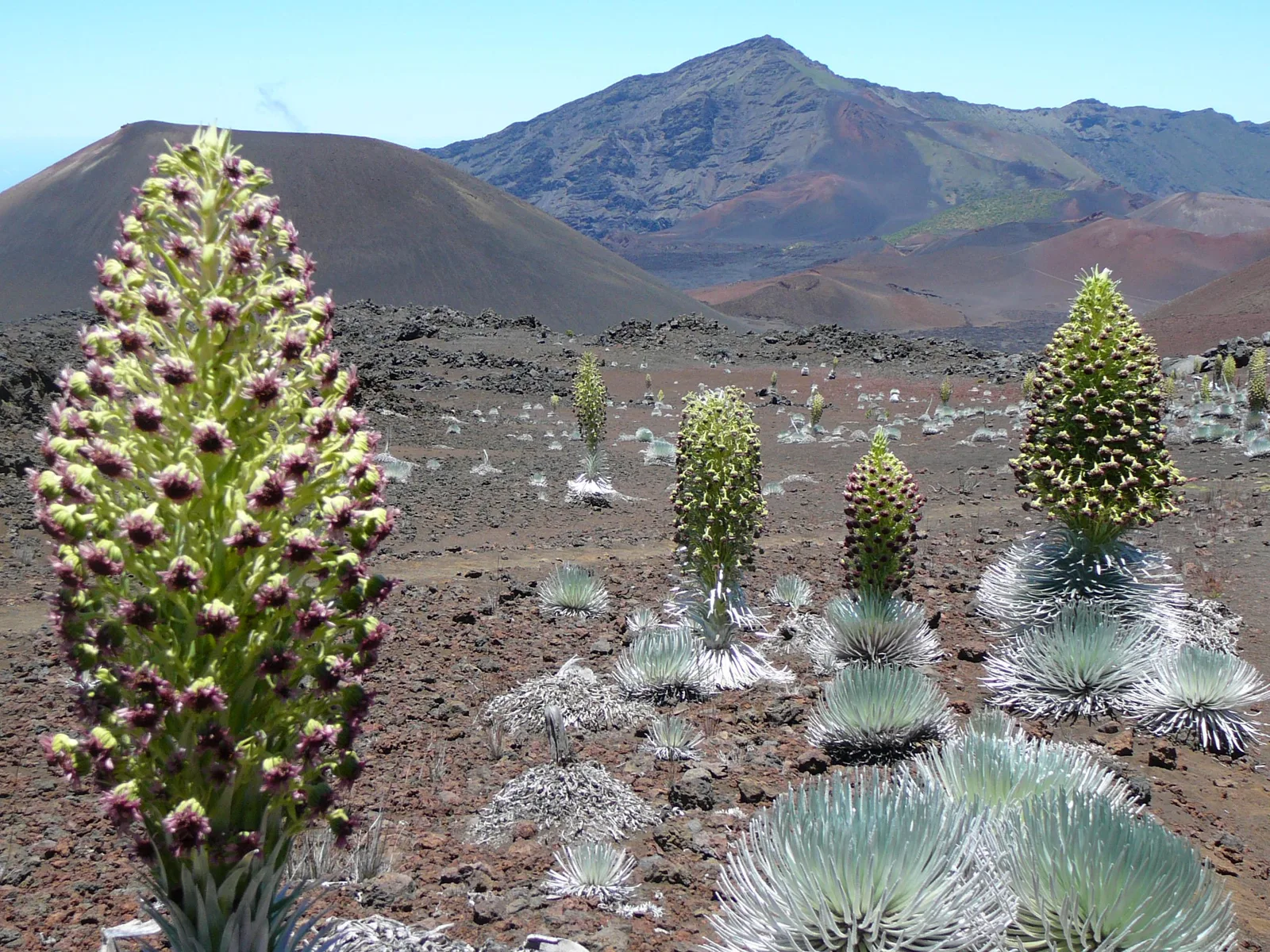
- Spring. Fewer crowds, silversword blooming, pleasant temperatures
- Fall. Good weather, shoulder season, easier sunrise reservations
- Winter. Rainy season but dramatic clouds, whale watching nearby
Wildlife
Nearby patches

Puʻukoholā Heiau National Historic Site
52 mi
Kalaupapa National Historical Park
60 mi